Roof Drains and Scuppers in Syracuse, NY
Roof drain and scupper repair for Syracuse, NY commercial buildings - capacity, freeze protection, and flow testing for a region designed around fast snowmelt.
Drainage Sized for How Fast a Syracuse Roof Actually Melts
A roof drain that works fine in a light summer rain can fall behind badly during a fast lake-effect thaw, when several inches of accumulated snow turn to water within a day or two. We size and check drainage against that reality, not simply against a typical rainstorm.
Internal Drains: The First Thing That Ices Shut
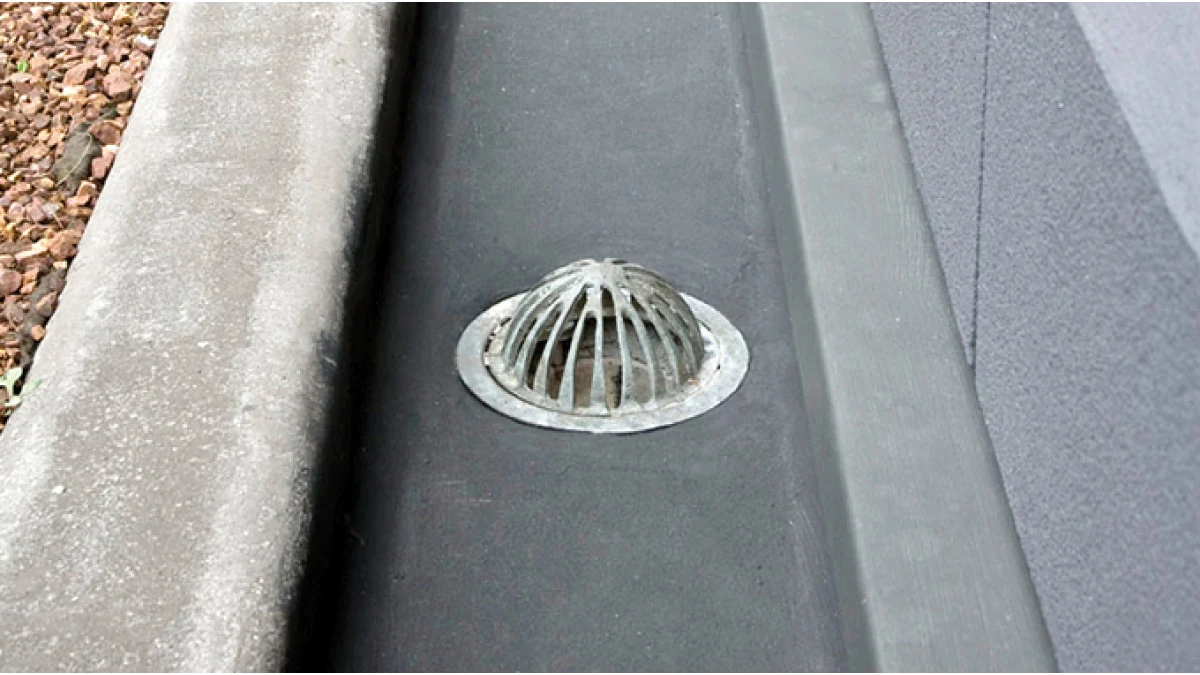
Internal roof drains are common on the larger flat roofs we work on around East Syracuse, Salina, and the warehouse stock near the airport corridor. In cold weather, a drain that isn't running warm enough water through it regularly can ice over at the strainer or in the leader line below deck, and once that happens the drain stops functioning exactly when the roof needs it most - during a heavy melt event.
We check drain flow, not simply visual clearance, because a strainer that looks clear from above can still be blocked by ice further down the line. Buildings with a history of drain freeze-ups sometimes benefit from heat trace at the drain bowl and leader line, particularly on roofs where the interior space below isn't heated enough to keep the line above freezing on its own.
Scuppers: Simple Until Ice Gets Involved
Scuppers are mechanically simpler than internal drains, but they're just as vulnerable to ice in this climate. A scupper opening can ice over at the outer edge even while water is backing up unseen on the roof side, since the cold outside air freezes the exposed opening faster than the water pooling behind it. That backed-up water finds the nearest weak point in the membrane or wall flashing, which is a common source of parapet-area leaks we get called out for in late winter.
We check scupper openings for ice-prone geometry and confirm they're sized correctly for the drainage area feeding them, since undersized scuppers are a recurring issue on older buildings that were built to a lighter rainfall standard than what actually needs to clear during a fast regional thaw.
Sizing Drainage for the Building, Not a Generic Standard
Drainage capacity has to match the roof's actual drainage area and this region's melt rate, not a one-size assumption. A large warehouse field with a single low point and one drain is a different risk profile than a smaller roof with multiple scuppers spread around the perimeter. We calculate drainage area per outlet and flag roofs where the existing system is undersized for what it's actually being asked to handle during peak lake-effect melt.
Ponding Water and What It Signals
Standing water more than a day or two after a storm or thaw usually points to one of three things: a clogged or iced drain, a low spot that's developed from structural settling, or a drainage system that was undersized from the start. We map ponding locations against the drainage layout to figure out which of those it is before recommending a fix, since a clogged drain gets a very different repair than a structural low spot does.
- Flow testing on internal drains, not simply visual strainer clearance
- Scupper openings checked for ice-prone geometry and correct sizing
- Drainage area per outlet calculated against actual roof layout
- Heat trace evaluated for drains and leader lines with a freeze history
- Ponding locations mapped against the drainage system to find the real cause
- Leader line inspection where feasible, not simply the visible roof-level component
Drainage as Part of a Larger Repair or Reroof
Drainage problems often surface during a broader project. A reroof is the practical point to correct undersized or poorly located drains with a tapered insulation plan, rather than treating drainage as a separate future project once the membrane's already down.
Drainage on Large Warehouse and Distribution Roofs
The bigger single-story roofs common around East Syracuse's distribution stock and the Salina industrial area present a specific drainage challenge: a large flat field with relatively few drain points has to move a lot of water fast when a heavy melt event hits all at once. We check whether the existing drain count and spacing were ever actually calculated for the roof's real square footage, or whether they were set by an older, more conservative building code that didn't anticipate this region's fast-melt volume.
Where a warehouse roof has a documented ponding pattern in one zone but not others, that's usually a sign the drainage was designed around an assumption that doesn't match how water actually moves across that specific field, and adding a drain or two in the right spot solves more than years of chasing the resulting membrane wear ever would.
Roof Drain and Scupper Questions
Why do our drains ice over even when the roof isn't that cold?
Interior drain leader lines that run through unheated space can freeze even when the roof surface itself is above freezing, especially overnight or during extended cold snaps.
How do you know if a drain is actually undersized?
We calculate the drainage area feeding each outlet and compare it against the outlet's capacity for this region's typical fast-melt volume, not simply a generic rainfall standard.
Is heat trace necessary on every roof drain?
No, but it's worth evaluating on drains and scuppers with a repeat freeze-up history, particularly where the space below the roof isn't heated enough to keep lines above freezing naturally.
What causes ponding water that doesn't drain within a day or two?
Usually a clogged or iced drain, a structural low spot, or a drainage system that was undersized from the start. We map the location to determine which before recommending a repair.
Should drainage be addressed during a reroof?
Yes, a reroof is the most practical time to correct undersized or poorly placed drains with a proper tapered insulation plan, rather than leaving it for a later separate project.
Questions About Roof Drains and Scuppers in Syracuse, NY
Ready to Review the Roof?
Service Area
Syracuse, NY
Roofing Category
Assessment Focus
Condition
Drainage
System options
Occupied operations
Next Step