Modified Bitumen Roofing in Syracuse, NY
Torch-applied and cold-applied modified bitumen roofing for Syracuse institutional buildings with complex rooflines, tie-ins, and ice-dam-prone transitions.
Modified Bitumen for Syracuse's Older Institutional Roofs
A good share of the older buildings we work on around the SU hill and the Upstate Medical campus were originally roofed in modified bitumen, and it's still a system we spec new when the building and budget call for it. Multi-ply asphalt-based membrane, torch-applied or cold-applied, with a track record on institutional buildings that's longer than most single-ply systems have existed.
Torch-Down vs. Cold-Applied Application
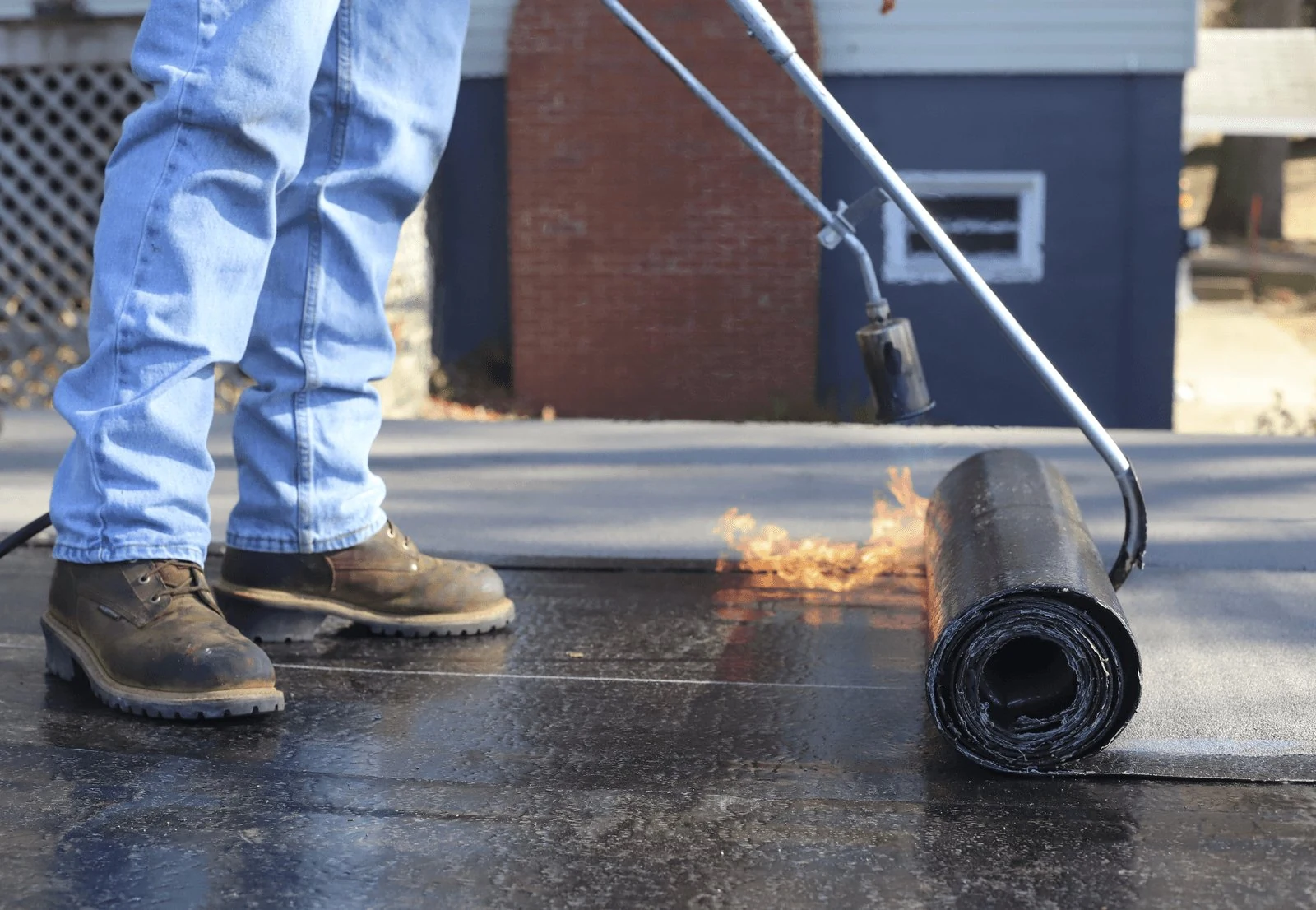
Torch-applied modified bitumen uses an open flame to melt the asphalt backing and bond each ply to the substrate - it produces a strong, monolithic seal but requires a fire watch and careful staging around any combustible materials on or near the roof, which matters on older buildings with wood blocking or nearby structures. We use torch application on jobs where the deck and surrounding conditions support it safely.
Cold-applied modified bitumen uses adhesive instead of a torch, which removes the fire risk and works well on buildings where torch work isn't practical - near air intakes, on decks with combustible insulation, or on occupied buildings where a fire watch adds too much disruption. Cold-applied systems take more careful attention to adhesive coverage and roller pressure to get a comparable seal, but the tradeoff is worth it on the right building.
Why It Holds Up on Older Institutional Buildings
A lot of the academic and hospital-adjacent buildings we work on have irregular rooflines from decades of additions - different roof heights, tie-ins between old and new sections, and penetrations added over the years for mechanical upgrades. Modified bitumen's multi-ply build-up gives it redundancy that a single-ply membrane doesn't have; if the top ply gets damaged, there's still a base ply doing work underneath. On a complicated roof with a lot of transitions and tie-ins, that redundancy has real value.
It also takes a granulated cap sheet well, which gives the finished roof some UV protection and a slightly more durable walking surface than a smooth single-ply membrane - useful on buildings where maintenance staff are up on the roof regularly.
Ice Dam Resistance at Tie-Ins and Transitions
The tie-in points between old and new roof sections on institutional buildings are where we see the most ice damming trouble during a Syracuse winter. Meltwater from a warmer, newer section can run toward an older, colder section and refreeze right at the transition, backing water under the membrane if the flashing detail isn't built for it. We detail these transitions with extra ply reinforcement and make sure drainage is actually routed away from the tie-in rather than assuming gravity handles it.
Base flashing height matters more here than on a simpler roof shape. We build flashing higher than code minimum at tie-ins and parapet transitions specifically because of how much ice can accumulate against a vertical surface during a hard freeze-thaw stretch.
Multi-Ply Build-Up and Insulation Strategy
A typical modified bitumen system on one of these buildings goes down in layers - base sheet, insulation, cover board, then the modified bitumen plies themselves, often a base ply and a cap sheet. We stagger insulation board joints between layers to cut down on thermal bridging, which matters on buildings that already have older, less efficient wall and roof assemblies underneath.
Things we check specifically on modified bitumen tie-in and transition work:
- Flashing height at parapet and wall transitions during freeze-thaw
- Ply overlap and seal quality at roof section tie-ins
- Drainage routing away from old-to-new roof transitions
- Cap sheet granule wear on high-traffic maintenance paths
- Base flashing condition at rooftop equipment curbs
- Expansion joint coverage on additions built decades apart
Maintenance on a Multi-Ply System
Modified bitumen roofs tend to show wear gradually rather than failing all at once, which is both an advantage and something we watch closely. Blistering, granule loss, and minor ply separation are all things we catch on routine inspections before they turn into an active leak. On institutional buildings with tight budget cycles, catching these issues early lets an owner plan a repair into next year's maintenance line instead of an emergency call in the middle of a semester or a hospital shift.
We also flag when a modified bitumen roof has enough wear that patch repairs stop making financial sense compared to a cap sheet recover or full replacement, and lay that out clearly rather than stacking repairs indefinitely on a roof that's past the point of it being the right call.
Modified Bitumen Questions
Is torch-down safe on an occupied building?
It can be, with proper fire watch procedures and coordination around air intakes and combustible materials, but we assess each building individually. Occupied hospitals and academic buildings often push us toward cold-applied systems instead.
How does modified bitumen compare to TPO for a school building?
Both work well. Modified bitumen's multi-ply redundancy suits buildings with complicated, additions-heavy rooflines, while TPO can be a better fit on a simpler, newer roof shape where reflectivity and lower material weight matter more.
Can you recover an old modified bitumen roof instead of tearing it off?
Often, yes, if the existing plies are dry and adhered soundly. We check moisture content in the insulation below before recommending a cap sheet recover over tear-off.
How long do these roofs typically last here?
Well-installed and maintained modified bitumen systems commonly reach two to three decades of service, though tie-in and flashing details tend to need attention before the field membrane does.
Do you need a fire watch for every torch-down job?
Yes, torch application always requires an active fire watch during work and for a period afterward, per standard roofing safety practice.
Questions About Modified Bitumen Roofing in Syracuse, NY
Ready to Review the Roof?
Service Area
Syracuse, NY
Roofing Category
Assessment Focus
Condition
Drainage
System options
Occupied operations
Next Step