EPDM Commercial Roofing in Syracuse, NY
EPDM rubber roofing installation, seam repair, and maintenance for Syracuse commercial buildings, from ballasted legacy roofs to new fully adhered systems.
EPDM Rubber Roofing for Older Syracuse Buildings
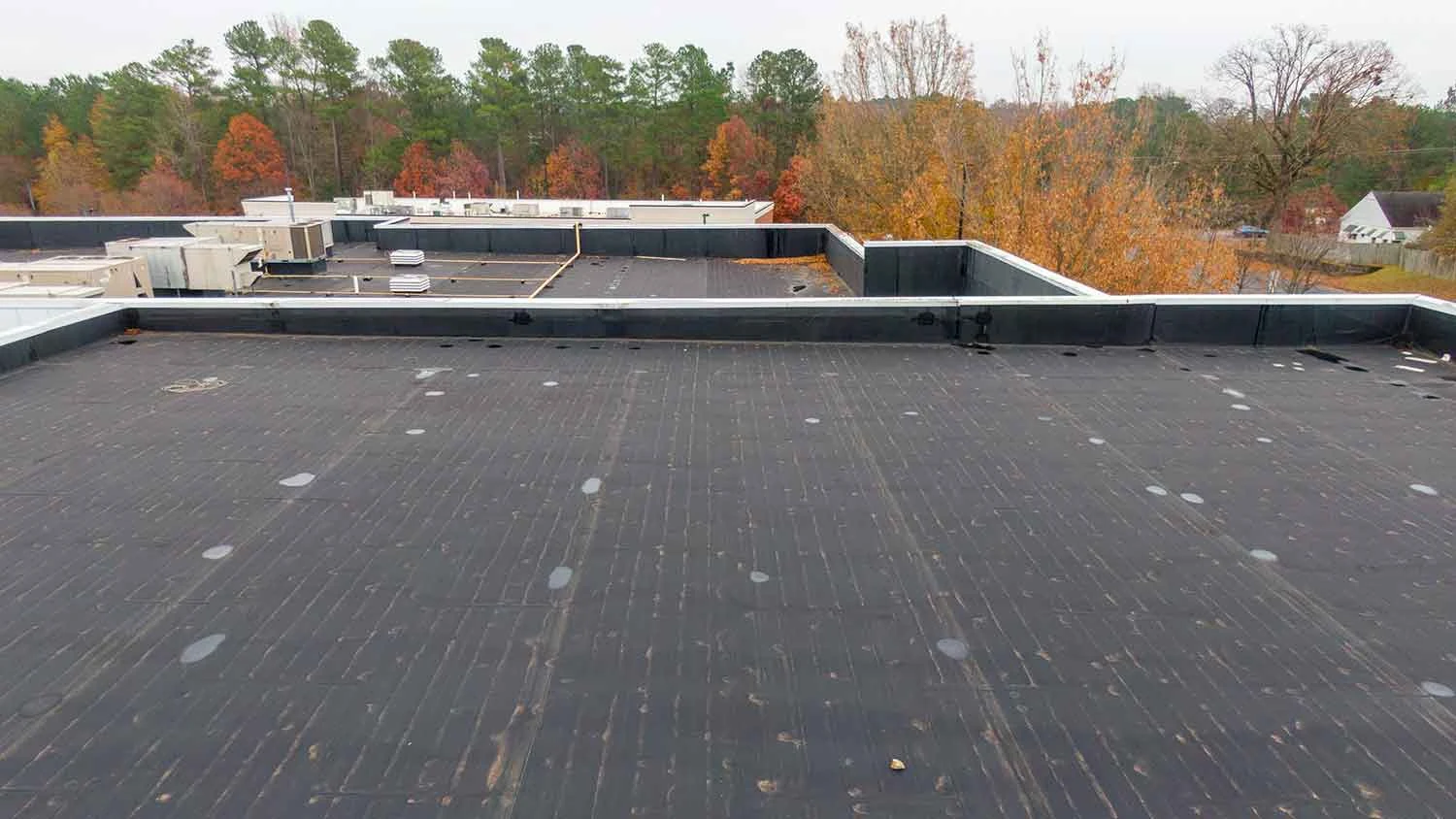
A lot of the commercial roofs we get called out to in Solvay, Eastwood, and along the older stretches of the city were originally EPDM, and plenty still are. Black rubber sheet, ballasted or fully adhered, and a system that's been around long enough that most of our crews could install it blind. It's still a solid choice for the right building - here's where it fits and where it doesn't.
Where EPDM Still Makes Sense
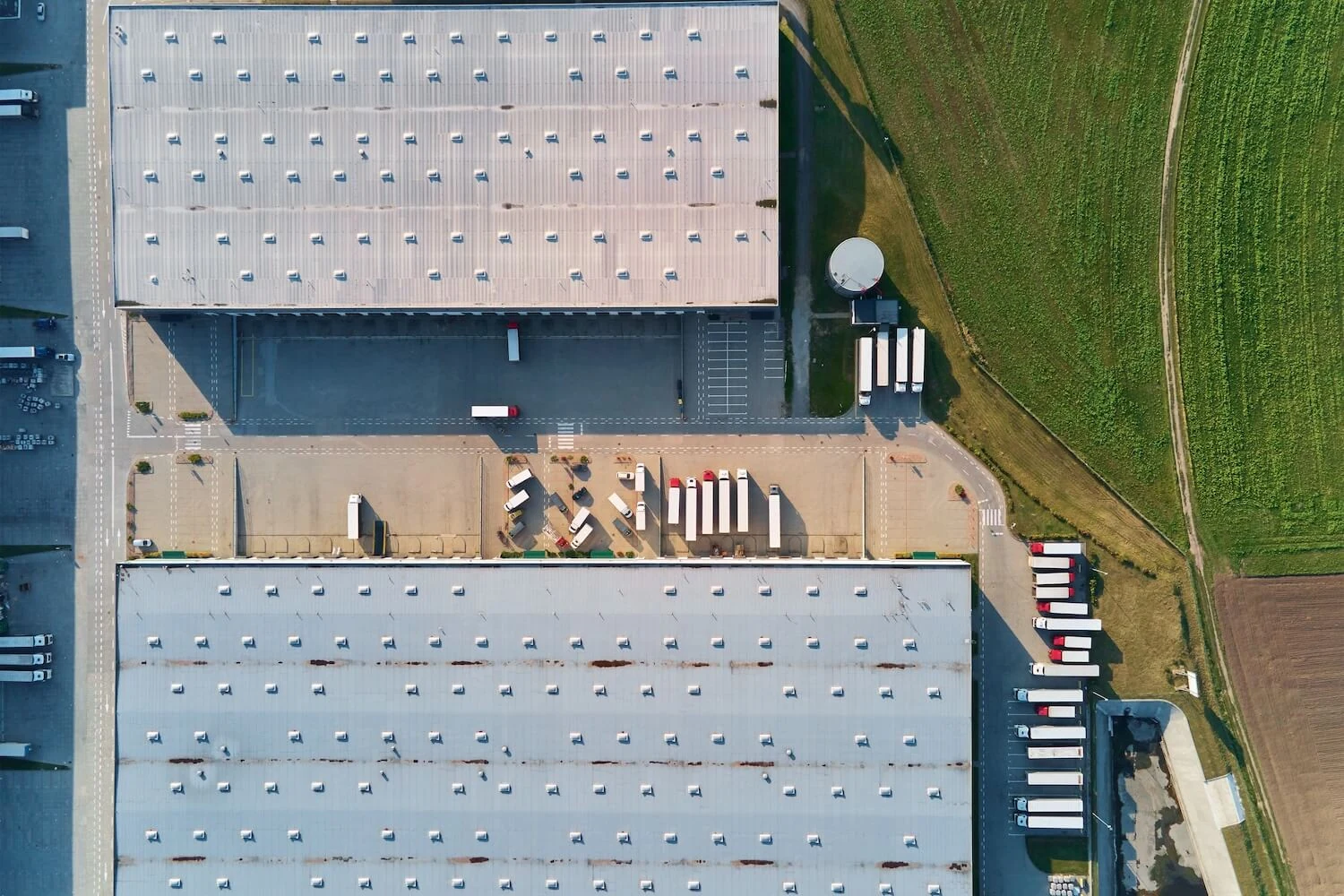
EPDM works well on buildings where the roof isn't visible from the street and reflectivity isn't a driving concern - legacy manufacturing buildings, older school additions, and warehouse space where the priority is a durable, cost-effective membrane over a large flat area. The black sheet absorbs heat, which actually helps shed snow faster on some low-slope roofs during a sunny winter day, though it also means the deck runs warmer, which isn't always a plus depending on the building's insulation situation underneath.
We still see plenty of EPDM specified on new low-slope installs too, particularly on buildings where the owner has had good long-term experience with rubber roofing and doesn't want to switch systems on a familiar building.
Ballasted vs. Fully Adhered Systems
Ballasted EPDM - rubber sheet loose-laid and held down with river stone or paver ballast - is common on older flat roofs across the city, especially on buildings from before mechanically attached systems became standard. It's fast to install and doesn't require perimeter fastening through the deck, but the ballast itself becomes a snow load consideration. A roof already carrying ballast weight has less structural margin left for accumulated snow, and we factor that into any assessment on an older ballasted roof.
Fully adhered EPDM uses bonding adhesive to attach the sheet directly to the insulation or cover board. It handles wind uplift better than ballast on taller buildings and doesn't add dead load to the structure, which is often the better call on a roof where we're already concerned about what the deck can carry through a heavy winter.
Seam Tape Aging and Why We Check It First
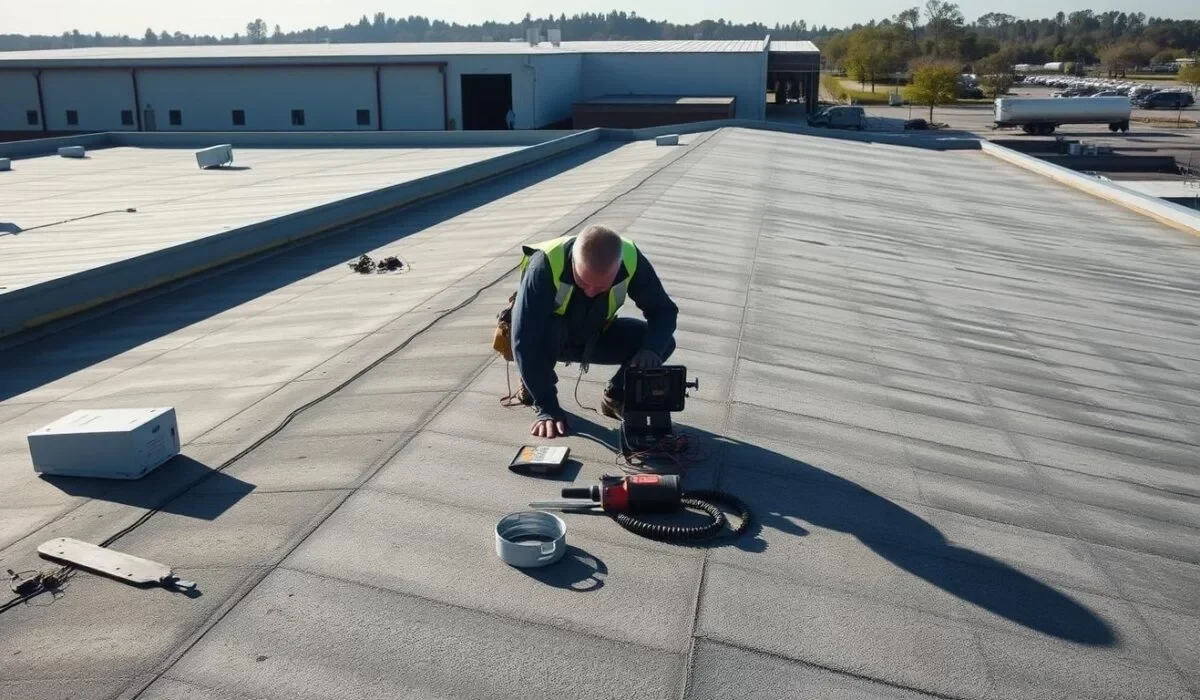
The most common failure point on an older EPDM roof isn't the field membrane - it's the seam tape. EPDM seams are made with a taped or liquid-applied splice rather than a hot-air weld, and that tape has a service life shorter than the membrane itself. On a roof that's fifteen or twenty years old, we expect to find seam tape that's lifted, dried out, or failed outright, usually well before the rubber sheet shows any real wear.
Our repair calls in Solvay and the older industrial pockets around the city are seam-related more often than not. We re-tape or re-splice failed seams as a standard repair, and on a roof with widespread seam failure, that's usually a signal the whole membrane is closer to the end of its service life even if the rubber itself still looks fine.
Freeze-Thaw Behavior of Rubber Membrane
EPDM stays flexible in cold weather better than some rigid membrane types, which helps it handle the expansion and contraction that comes with Syracuse's freeze-thaw swings. But repeated cycling still stresses the seams and any patch work over time, more than it stresses the field sheet. That's part of why our maintenance visits on EPDM roofs focus heavily on seam inspection rather than just walking the field for punctures.
We inspect these areas closely on every EPDM maintenance visit:
- Seam tape lift at horizontal and vertical splices
- Pitch pan condition around pipe and conduit penetrations
- Ballast displacement near roof edges after high wind events
- Termination bar security at parapet walls
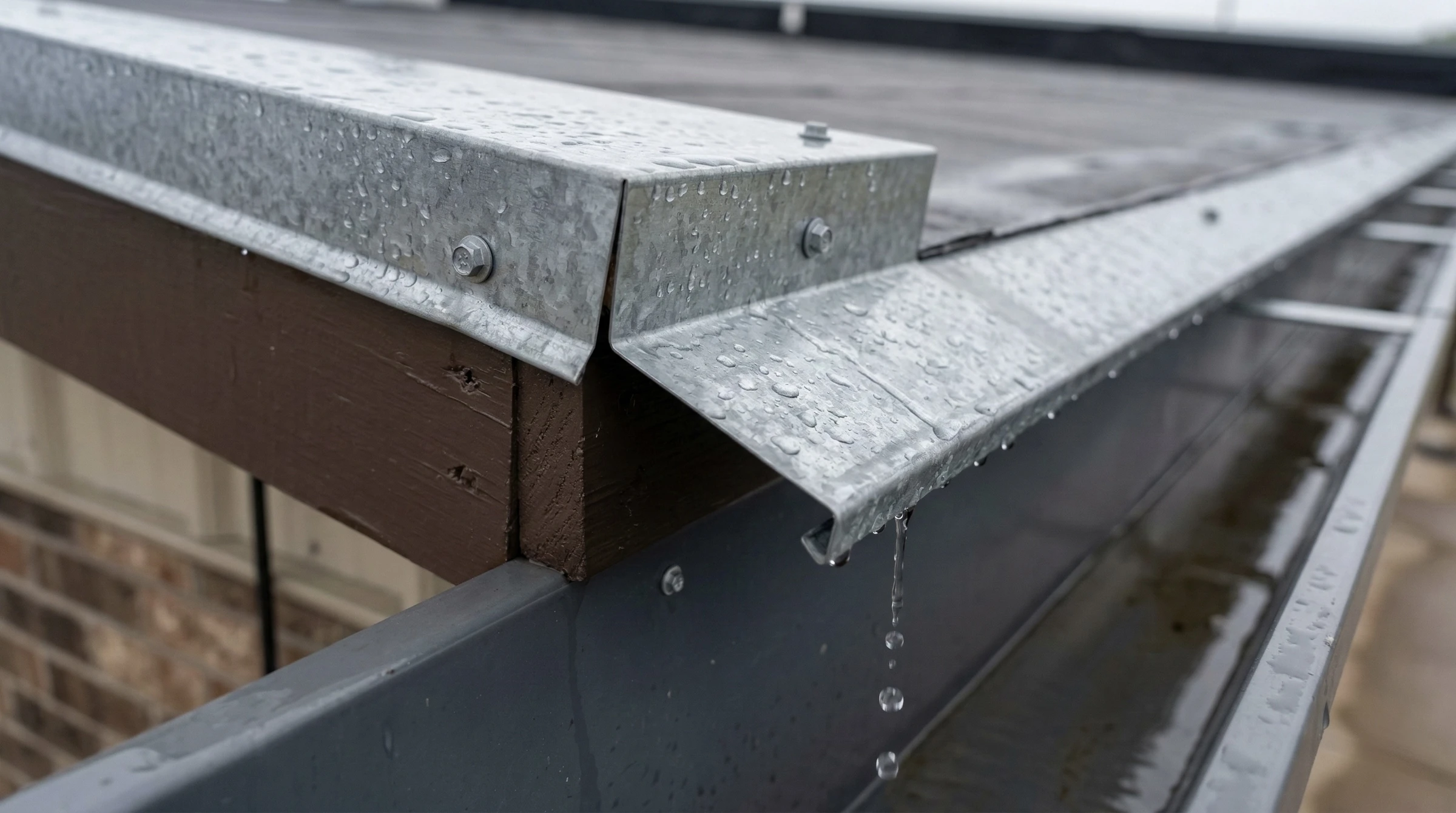
- Pooling water near low spots that refreezes overnight
- Patch condition on any prior repair work
Repair vs. Recover vs. Replacement
Not every EPDM roof with seam problems needs full replacement. If the field membrane is still sound and the deck and insulation underneath are dry, re-taping seams and patching problem areas can add years of service life for a fraction of replacement cost. We only recommend recover or tear-off when the membrane itself has widespread cracking, the insulation underneath is wet, or the roof has already been patched enough times that further repair isn't a reasonable investment for the building owner.
We walk every EPDM roof and give an honest read on which category it falls into before recommending anything. A roof with a few bad seams gets a repair quote, not a replacement pitch.
EPDM Questions From Building Owners
Is EPDM cheaper than TPO for a new install?
Material costs are often comparable, though EPDM installation labor can run lower on large, simple roof shapes since there's no hot-air welding equipment involved. The right choice depends more on the building's specific needs than on price alone.
How do I know if my EPDM roof needs re-taping or full replacement?
We look at how widespread the seam failure is, whether the field membrane itself has cracking or thinning, and whether there's any sign of moisture in the insulation below. A roof with isolated seam issues on an otherwise sound membrane is usually a repair candidate.
Does black EPDM cause ice damming problems?
The membrane color has less to do with ice damming than drainage design and insulation performance. Poor drainage and heat loss through the roof assembly are the bigger drivers of ice buildup at parapets and drains.
Can ballasted EPDM handle heavy snow years?
It depends on what the structure was designed to carry. We check the building's structural capacity against current ballast weight plus expected snow load before signing off on a ballasted system for a roof we haven't worked on before.
How often should an EPDM roof get inspected in this climate?
We recommend at least two inspections a year on EPDM roofs here - once before winter to catch seam and drainage issues, and once in spring to assess any damage from the freeze-thaw season.
Questions About EPDM Commercial Roofing in Syracuse, NY
Ready to Review the Roof?
Service Area
Syracuse, NY
Roofing Category
Assessment Focus
Condition
Drainage
System options
Occupied operations
Next Step