Built-Up Roofing in Syracuse, NY
Tar and gravel built-up roof repair, recoating, and replacement guidance for Syracuse's older commercial and industrial buildings.
Tar and Gravel Roofing on Syracuse's Legacy Buildings
Built-up roofing - tar and gravel, or BUR, whatever a building owner calls it - is still up on plenty of the older commercial and industrial buildings downtown and in the legacy manufacturing pockets around the city. It's not what we spec new very often anymore, but we repair and maintain a lot of it, and there's a right way to keep an old BUR roof going and a point where that stops making sense.
What's Actually Up There
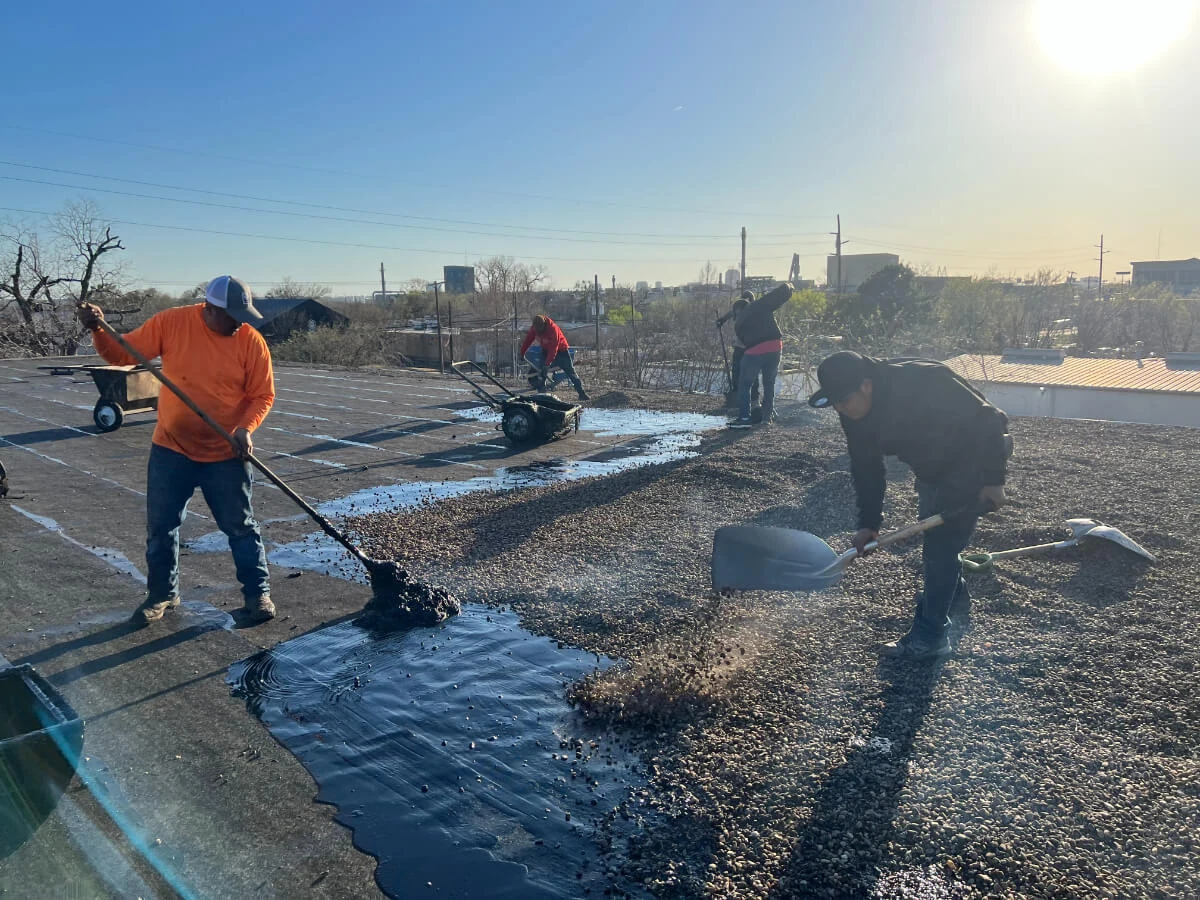
A built-up roof is layers of asphalt-saturated felt bonded together with hot asphalt, topped with a gravel or slag ballast layer that protects the membrane from UV and foot traffic. Some of the pre-war commercial buildings downtown and older industrial buildings in Solvay still have BUR systems that have been recoated and patched over decades rather than replaced outright. The gravel layer does real work - it's not simply decorative - shielding the asphalt plies from sun exposure that would otherwise dry them out and crack them faster.
We still see BUR specified occasionally on new construction where an owner wants the redundancy of a multi-ply system and the roof design supports the extra dead load of a ballasted assembly, but it's a smaller share of our new-install work than modified bitumen or single-ply systems.
Why Multi-Ply Redundancy Matters Under Heavy Snow
The layered construction of a BUR roof gives it a real advantage during heavy snow years - if ice or debris damages the top ply, there are usually several more plies underneath still doing the job of keeping water out. That redundancy is part of why some of these old roofs are still functioning after decades of Syracuse winters despite obvious surface wear. It doesn't mean the roof is fine indefinitely, but it does mean a BUR roof tends to degrade slowly and visibly rather than failing all at once.
Snow load on a ballasted BUR roof is a genuine structural question on older buildings, though. Gravel ballast adds permanent dead load on top of whatever the deck was originally designed to carry, and on a legacy building where we don't always have original structural drawings, we look closely at how much margin is actually left before recommending any additional weight go on the roof.
Where These Roofs Actually Fail
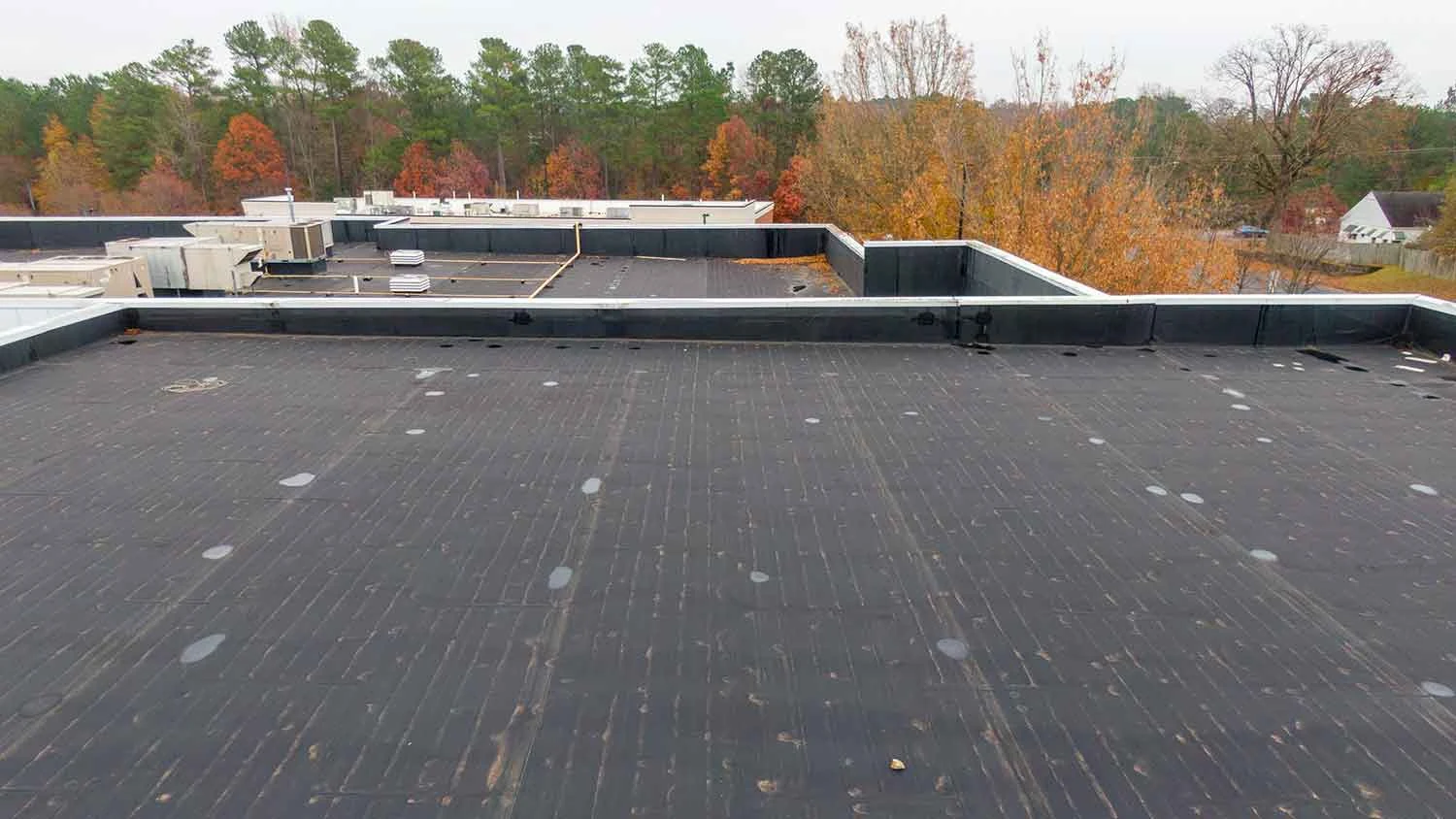
Blistering is the most common issue we find - pockets where moisture got trapped between plies during the original install or a later repair, then expands and contracts with temperature swings until it lifts a bubble in the surface. Alligatoring, the cracked-and-checked surface pattern that shows up as the asphalt dries out and loses flexibility, is common on roofs where the gravel ballast has thinned or shifted away from bare patches. Both are symptoms of a membrane reaching the end of its useful flexibility, not usually an immediate leak risk on their own, but they're warning signs.
Drains and parapet flashings fail before the field membrane does on most of the BUR roofs we inspect, the same pattern we see across almost every membrane type in this climate - ice damming and ponding water concentrate stress at those transition points more than anywhere else on the roof.
Patch, Recoat, or Replace
We evaluate an old BUR roof the same way every time: how much bare, exposed asphalt is showing where gravel has thinned, how extensive the blistering and alligatoring are, and whether there's any sign of moisture reaching the insulation or deck below. A roof with isolated bare spots and minor surface cracking is often a good candidate for a gravel top-up and asphalt recoat, which can add real years of service life at a fraction of replacement cost.
Things that push us toward recommending recover or replacement instead of another patch:
- Widespread alligatoring across most of the roof surface, not isolated patches
- Multiple prior tar patches stacked on top of each other at the same leak points
- Confirmed wet insulation found during a core sample
- Ballast displacement exposing large areas of bare membrane
- Structural concerns about additional ballast weight on an aging deck
- Repeated leak calls at the same location despite prior repairs
What Replacement Usually Looks Like
When an old BUR roof is past the point of reasonable repair, we don't automatically default back to another built-up system. Most of the time we recommend a tear-off to a sound deck and a switch to modified bitumen or single-ply, both of which offer lighter dead load and faster install than a new multi-ply hot asphalt system. The decision comes down to what the deck can support, what the budget allows, and how the owner plans to use the building going forward.
Built-Up Roofing Questions
Is my old tar and gravel roof still safe to leave in place?
It depends on what our inspection finds. Isolated wear with a sound deck underneath can often keep going with maintenance, but widespread blistering or confirmed moisture in the insulation is a different situation that needs addressing.
Why don't you recommend built-up roofing for most new installs?
Modern single-ply and modified bitumen systems generally install faster, weigh less, and don't require hot asphalt kettles on site, which matters on occupied buildings and tighter urban lots. BUR still has a place, just a smaller one than it used to.
How do you check for wet insulation under a BUR roof?
We use core sampling and, where appropriate, moisture scanning to identify wet areas before recommending a scope of work, rather than guessing based on surface appearance alone.
Can gravel ballast be added back to an old roof to extend its life?
Sometimes, if the underlying asphalt plies are still sound and simply need renewed UV protection. We check the plies first before recommending a re-ballast and recoat.
How much does an old BUR roof's weight matter for future changes?
It matters a lot if an owner wants to add rooftop equipment or solar in the future. We factor existing ballast weight into any conversation about additional roof loading.
Questions About Built-Up Roofing in Syracuse, NY
Ready to Review the Roof?
Service Area
Syracuse, NY
Roofing Category
Assessment Focus
Condition
Drainage
System options
Occupied operations
Next Step