80-Mil TPO Roofing in Syracuse, NY
80-mil TPO for heavy-traffic and mechanical-heavy Syracuse commercial roofs: puncture resistance under drift load, hail impact, and hospital-grade spec work.
When We Move a Syracuse Roof Up to 80-Mil TPO
Eighty-mil TPO costs more per square than 60-mil, and we don't spec it as a default. We spec it when the roof itself tells us to - heavy mechanical loading, dense rooftop traffic, or a facility where a membrane failure isn't a minor repair, it's a shutdown.
Thickness Is a Puncture and Impact Number
The extra 20 mils doesn't change the chemistry, it changes how much abuse the sheet takes before it fails. On roofs with a lot of rooftop units, snow removal equipment dragging across the surface, or maintenance crews walking the field regularly in winter boots and metal shovels, that extra thickness is the difference between a membrane that shrugs off a season of foot traffic and one that starts showing wear points by year three.
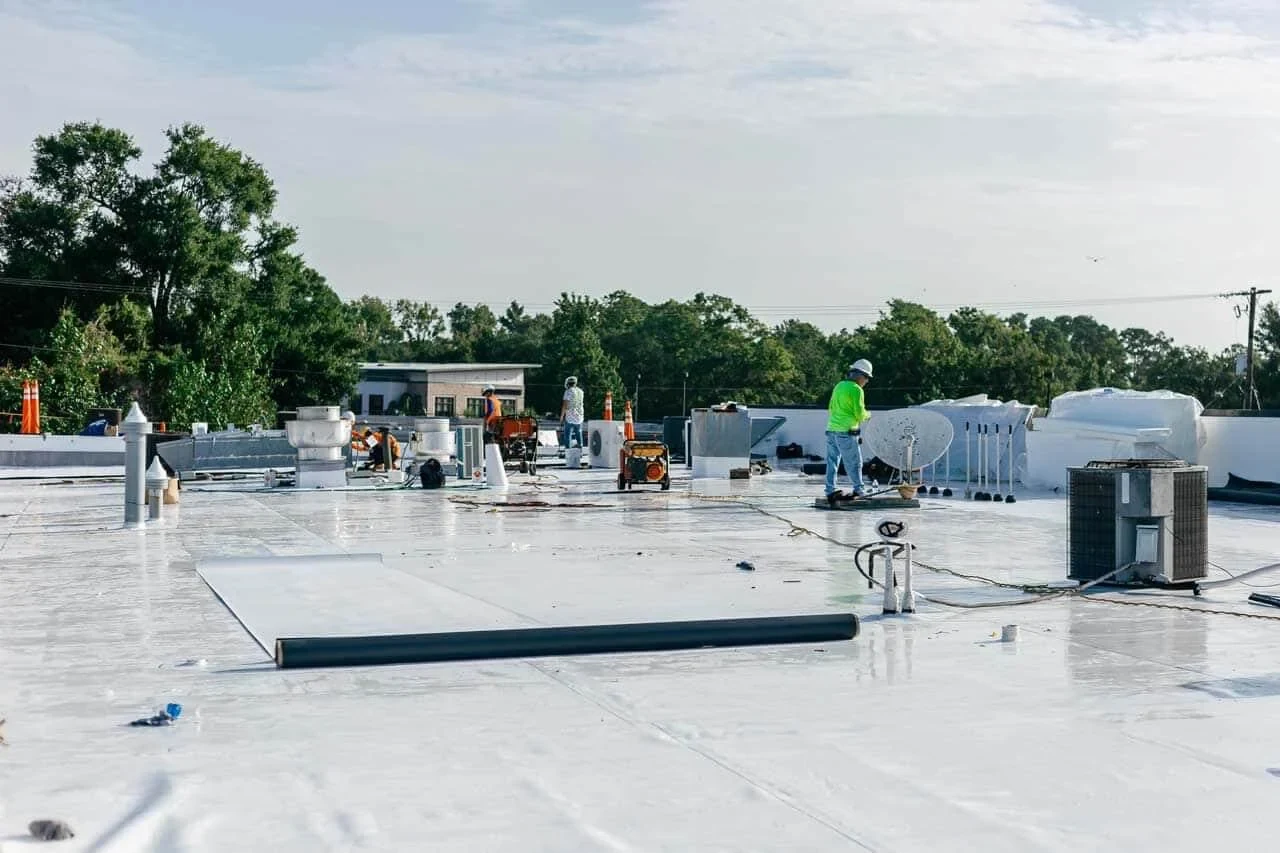
We see this most on Carrier Circle office and hotel roofs in DeWitt, where rooftop mechanical density is high and access hatches get used constantly for HVAC service. The membrane around those hatches and unit curbs takes more contact than the open field, and 80-mil holds up to it better over the life of the roof.
Snow Removal Traffic Is a Real Load Factor
Syracuse gets enough lake-effect snow that flat commercial roofs sometimes need mechanical snow removal, not simply natural melt-off, particularly on structures already carrying drift accumulation against parapets or rooftop screens. Shovels, plastic scrapers, and even snow blowers running across a membrane surface put a different kind of wear on the sheet than weather alone. On any roof where we know snow removal crews will be working the surface every winter, we push the spec toward 80-mil so the membrane isn't the first thing to show damage from that traffic.
Drift Concentration at Parapets and Screen Walls
The same drift physics that load a 60-mil roof hit an 80-mil roof, just with a membrane better equipped to handle the standing weight and the mechanical stress of ice forming and breaking loose against a parapet wall. On buildings with tall parapets or rooftop screening - hotels, medical buildings, some retail boxes - snow can pile several feet deep in a corner while the rest of the roof carries a few inches. That's exactly the kind of concentrated load where a heavier membrane and a fastening pattern designed around the actual drift map matter more than the average snow depth on the label.
Hospital and Institutional Roofs
Downtown Syracuse carries a cluster of hospital, university-adjacent, and institutional roofs where a leak isn't a minor inconvenience - it's an operating room, a server closet, or a lab under that deck. We spec 80-mil on most of that work by default, not because code requires it, but because the cost difference is small relative to the consequence of a membrane failure over sensitive space below.
- Roofs with dense rooftop HVAC and frequent maintenance access
- Buildings requiring mechanical snow removal most winters
- Hospital, lab, and data-sensitive facilities where downtime cost is high
- Tall-parapet or screen-wall roofs with heavy drift concentration
- Hotel and multi-tenant office roofs with frequent contractor foot traffic
What This Means for a Bid
We walk the roof and count the real traffic points before recommending 80-mil over 60-mil - rooftop unit density, hatch locations, parapet height, drift zones, and how the building actually gets maintained through a winter. If a roof doesn't carry that kind of load, we say so and quote the lighter gauge, because there's no reason to pay for puncture resistance a roof will never test.
With Micron's semiconductor buildout moving forward in Clay, we expect more heavy-mechanical industrial and flex-space roofs coming through in the next several years, and 80-mil is very often the right first call on that class of building given the rooftop equipment density those facilities typically carry.
Common Questions About 80-Mil TPO
Is 80-mil TPO worth the extra cost over 60-mil?
It depends on the roof's traffic and mechanical load. On a low-traffic building it's often not necessary. On a roof with heavy rooftop equipment or routine snow removal, the added durability usually pays for itself.
Does 80-mil last longer than 60-mil in a Syracuse winter?
Both gauges handle normal weather cycling fine. The difference shows up under mechanical stress - foot traffic, snow removal equipment, and rooftop unit servicing - where the thicker sheet resists puncture and wear longer.
Can 80-mil TPO be welded in cold weather?
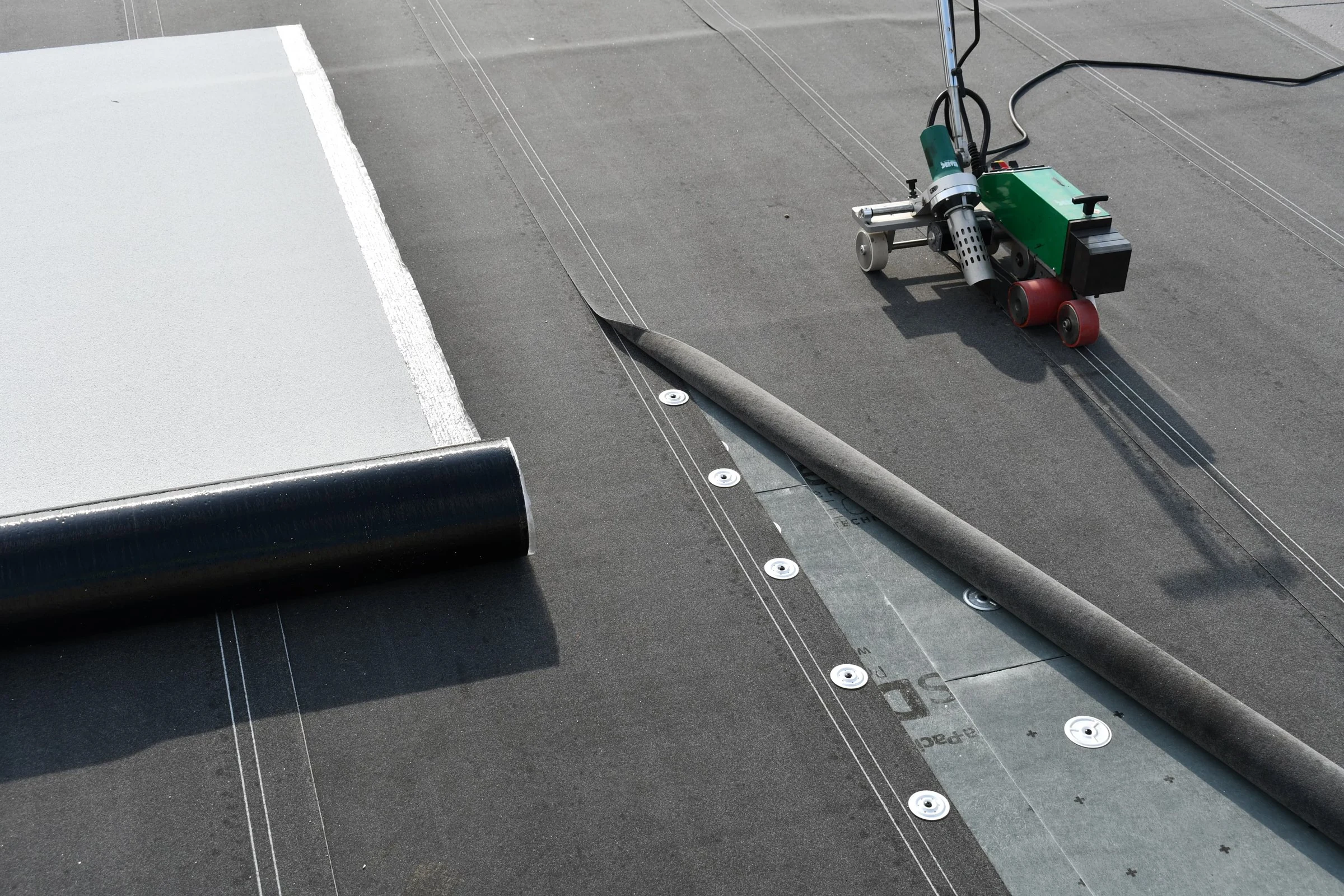
Yes, using the same hot-air welding process as 60-mil, and we schedule seam work around the same temperature and moisture requirements regardless of thickness.
Do hospitals require 80-mil membrane by code?
No, it's not a code requirement. We recommend it on high-consequence facilities because the added durability lowers leak risk on buildings where downtime is expensive.
How do you decide which gauge a specific roof needs?
We walk the roof, count rooftop equipment and access points, check parapet height and drift exposure, and ask how the building is maintained through winter before recommending a gauge.
Questions About 80-Mil TPO Roofing in Syracuse, NY
Ready to Review the Roof?
Service Area
Syracuse, NY
Roofing Category
Assessment Focus
Condition
Drainage
System options
Occupied operations
Next Step