PVC Roofing Systems in Syracuse, NY
PVC membrane roofing for Syracuse food-processing, brewery, and healthcare facilities: chemical resistance, welded-seam durability, and where we spec it.
PVC Membrane for Grease, Fume, and Chemical Exposure on Syracuse Roofs
PVC is the membrane we reach for when a roof deals with more than plain weather. Grease-laden exhaust, chemical vapor, and food-and-beverage process lines break down ordinary membrane chemistry faster than most owners expect. PVC is a smaller share of our bids than TPO or EPDM, but on the right building it's the only membrane we'll put our name behind.
What the Chemistry Actually Resists
PVC's plasticized vinyl formulation holds up to oils, greases, and a range of chemical exposures that will slowly soften or degrade a TPO or EPDM sheet over time. That's not marketing language, it's just how the two chemistries behave differently under the same exhaust stream. TPO and EPDM handle sun, hail, and freeze-thaw as well as PVC does. Where PVC pulls ahead is anywhere a roof deck sits under vapor it wasn't designed to shed.
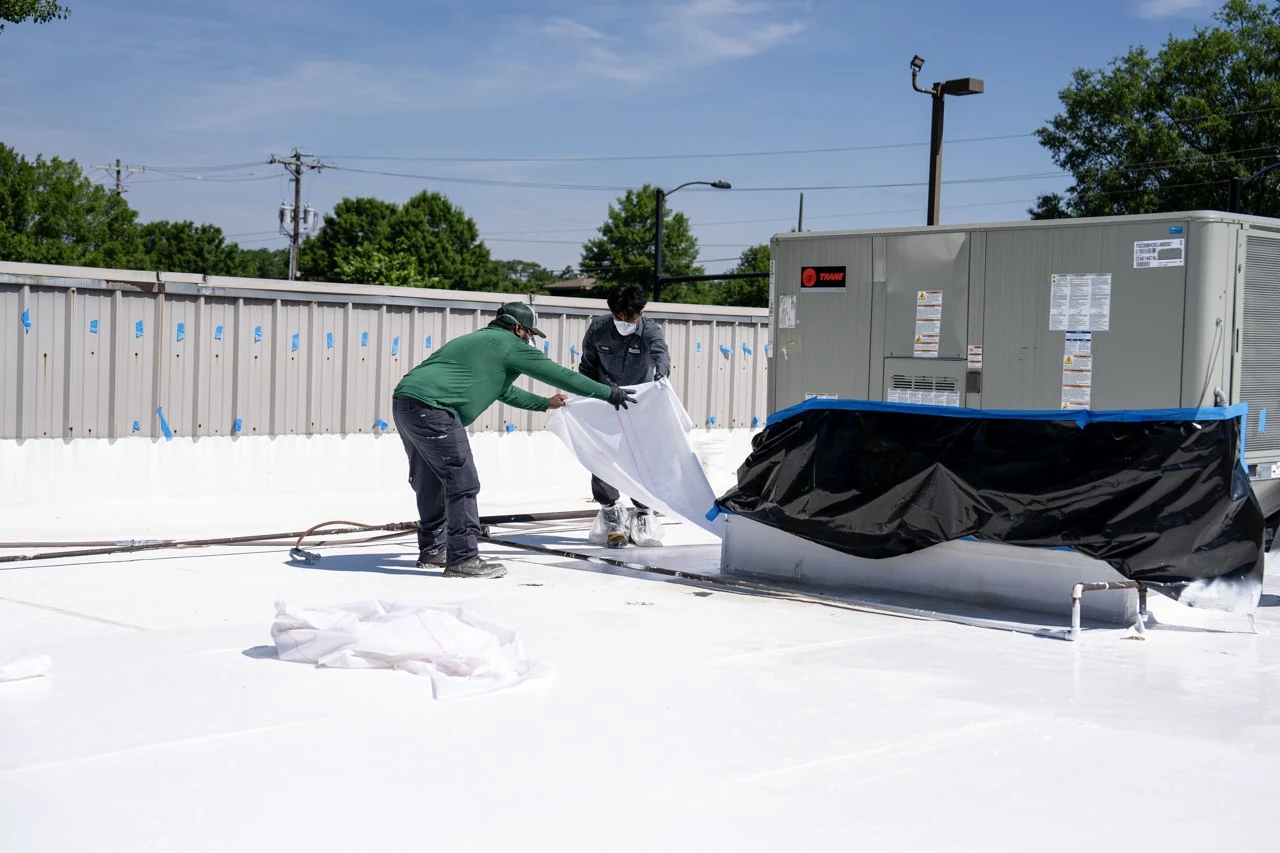
We don't spec PVC across an entire roof just because one exhaust point needs it. Most of our PVC bids run the membrane locally, around the stacks and vents where exposure concentrates, with a different field membrane covering the rest of the roof where plain weather is the only thing it has to survive.
Baldwinsville Brewery and Fulton Food-Processing Roofs
The Anheuser-Busch brewery complex in Baldwinsville, along with the surrounding Radisson industrial park, is the kind of site where roof exhaust and vent stacks carry more than plain kitchen air. Brewing and packaging operations vent grain dust, cleaning chemicals, and process vapor straight across sections of roof deck, and a standard membrane sitting under that exposure for years starts to show it.
Fulton's food-processing base, tied to the Huhtamaki packaging plant and the town's broader food-manufacturing legacy, presents the same problem from a different angle. Grease-laden exhaust from processing equipment settles on the roof surface near vents and rooftop units, and we've pulled membrane samples off older built-up roofs in that corridor that were visibly softened by years of exactly that exposure.
Hospital and Lab Exhaust Downtown
Downtown Syracuse's hospital and medical-office roofs, clustered near the university hill, sometimes carry rooftop exhaust from labs, sterilization equipment, or kitchen operations that behaves the same way as a food plant's vent stack - concentrated exposure at specific points on an otherwise ordinary roof. We walk exhaust and vent locations on every institutional bid before deciding on a membrane plan, rather than assuming one chemistry covers the whole building.
On a hospital roof, we're also weighing rooftop traffic from mechanical service calls against membrane choice. PVC's welded seams and puncture resistance hold up well to that kind of repeat foot traffic near equipment platforms, which is part of why it comes up on institutional bids beyond just the chemical-exposure question.
Welded Seams Through a Syracuse Winter
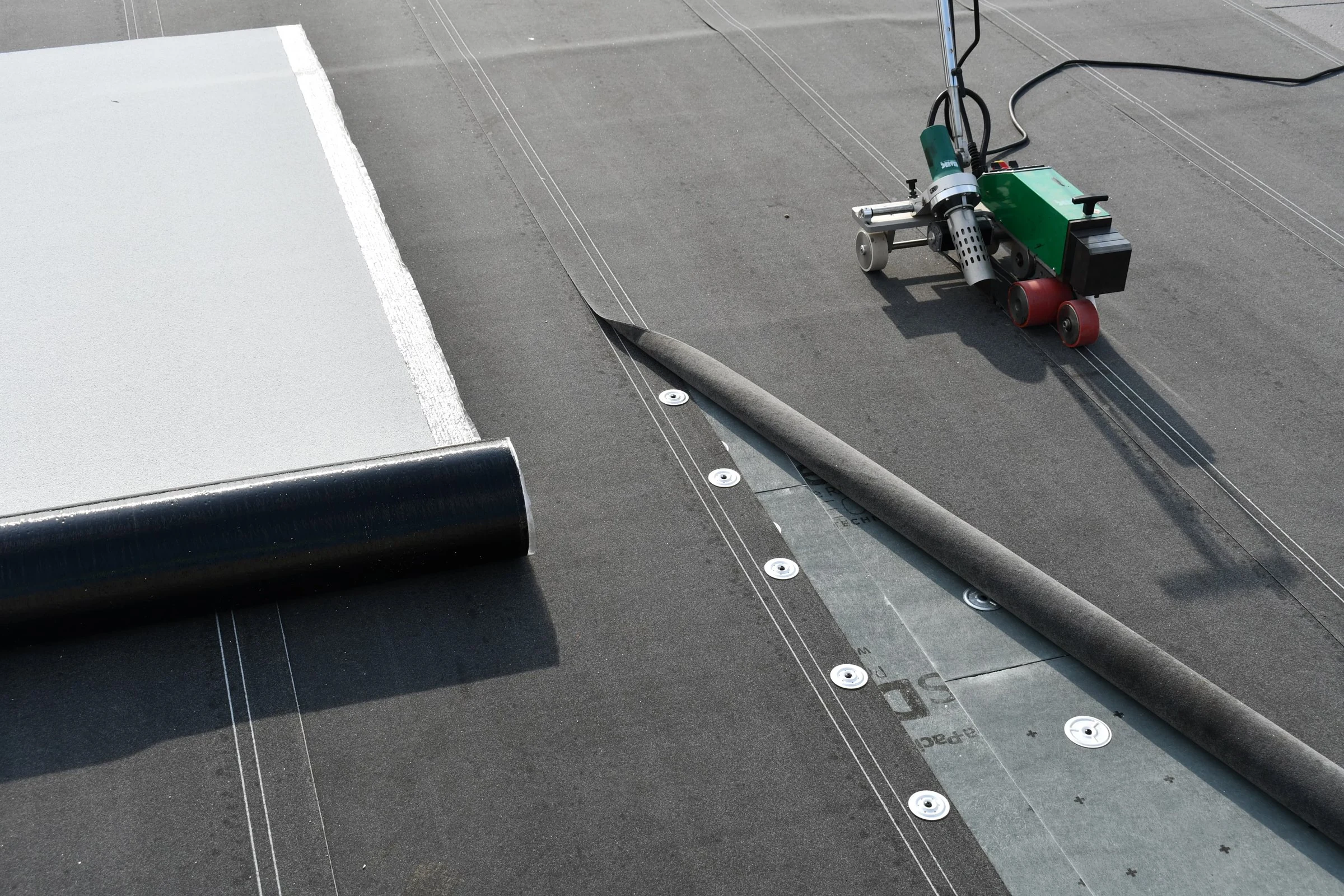
Like TPO, PVC seams get heat-welded rather than glued, so the same cold-weather scheduling limits apply. A hot-air weld needs a dry deck and a workable ambient temperature to bond correctly, and Syracuse's lake-effect winters cut into that window from November through March most years. We stage tear-off and temporary dry-in around the days that actually support a clean weld instead of pushing seams through in bad conditions just to hold a schedule.
- Food-processing and packaging facility roofs with grease-laden exhaust
- Brewery and beverage-production roofs with chemical vent exposure
- Hospital and lab roofs with sterilization or fume exhaust points
- Roofs needing targeted chemical-resistant detailing around specific penetrations
- Long-ownership-horizon buildings where welded-seam durability matters most
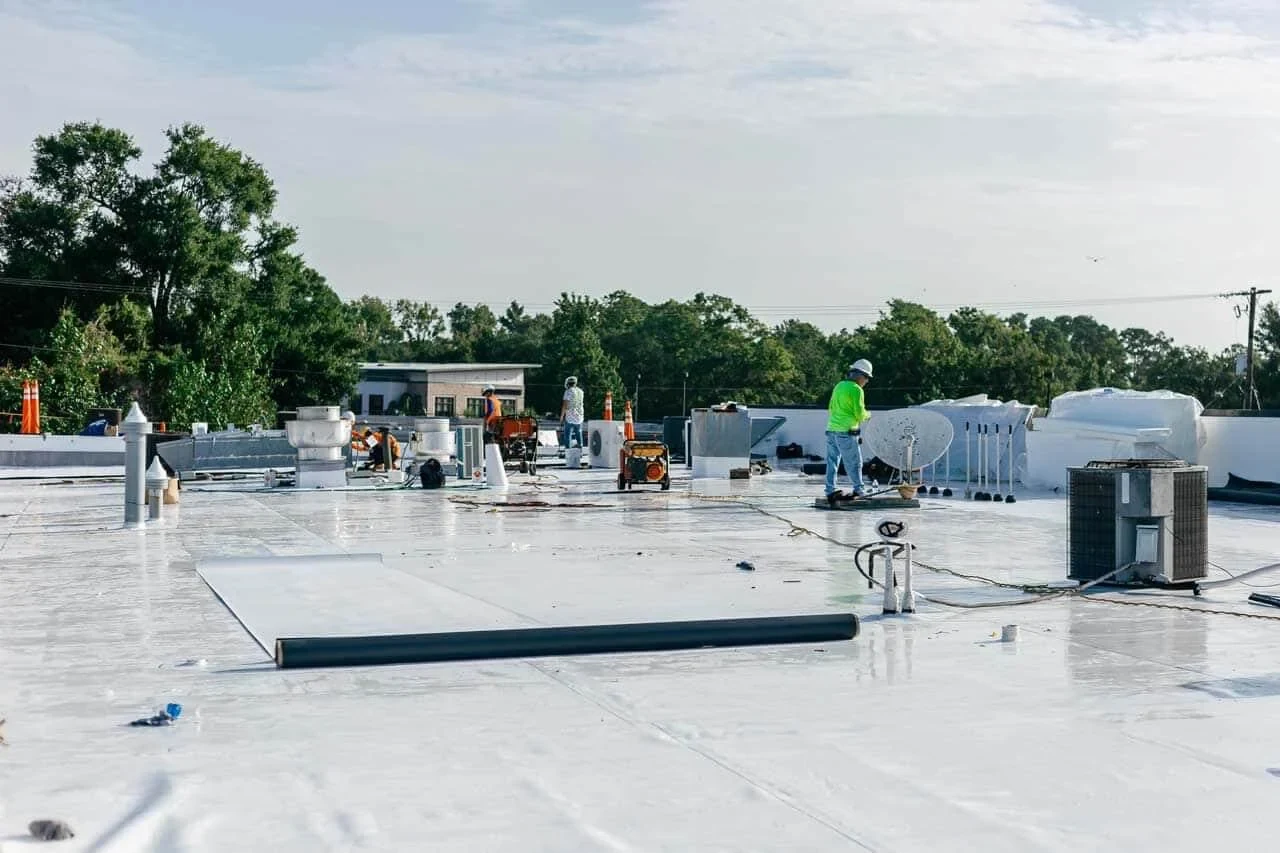
We test seam strength on a sample basis during install on every PVC job, in addition to the final walkthrough. A weld that looks fine the day it's done doesn't always tell you how it'll hold up after its first full freeze-thaw cycle, so we check before the crew leaves the roof rather than after a callback.
Where PVC Isn't Worth the Premium
On a standard warehouse or retail roof with no chemical exposure, PVC usually costs more than TPO without buying the owner anything extra. We tell owners this directly instead of upselling a membrane the roof doesn't need. PVC earns its price on exposure, not on general weather performance, and TPO and EPDM both perform comparably well against this region's freeze-thaw and snow load on a roof that isn't dealing with grease or chemical vapor.
We also weigh PVC against modified bitumen on some of the older industrial buildings around Solvay and East Syracuse, where legacy multi-ply assemblies and existing insulation sometimes favor sticking with a built-up system over converting to single-ply, depending on deck condition.
PVC Roofing Questions From Building Owners
Does PVC really resist grease better than TPO?
Yes. PVC's chemistry holds up to oils, greases, and many chemical exposures that soften TPO and EPDM membranes over time, which is why we spec it around exhaust and vent penetrations on food and chemical-exposed roofs.
Can PVC and TPO be used on the same roof?
Yes, and we do this often. We'll run TPO across the general field and PVC specifically around exhaust stacks or chemical-exposure points where it's justified, rather than switching the whole roof to a more expensive membrane.
Does PVC crack in cold Syracuse winters?
Modern PVC formulations hold up well to cold-weather cycling. We watch plasticizer stability as part of long-term performance planning on very long ownership horizons, though this is far less of a concern than it was with older PVC products.
Is PVC more expensive than TPO or EPDM?
Generally yes, per square. We recommend it where chemical or grease exposure justifies the cost, not as a default membrane choice on a building that doesn't need it.
How do you weld PVC seams in winter?
Same hot-air welding process and temperature constraints as TPO. We schedule seam work around weather windows that support a proper bond and use temporary dry-in when the calendar doesn't cooperate.
Questions About PVC Roofing Systems in Syracuse, NY
Ready to Review the Roof?
Service Area
Syracuse, NY
Roofing Category
Assessment Focus
Condition
Drainage
System options
Occupied operations
Next Step