Manufacturing Plant Roofing in Syracuse, NY
Manufacturing plant roofing for supplier and support buildings rising around Clay's chip fab buildout, priced from deck condition and snow load up.
Roofing the Supplier and Support Buildings Rising Around Clay's Chip Fab Buildout
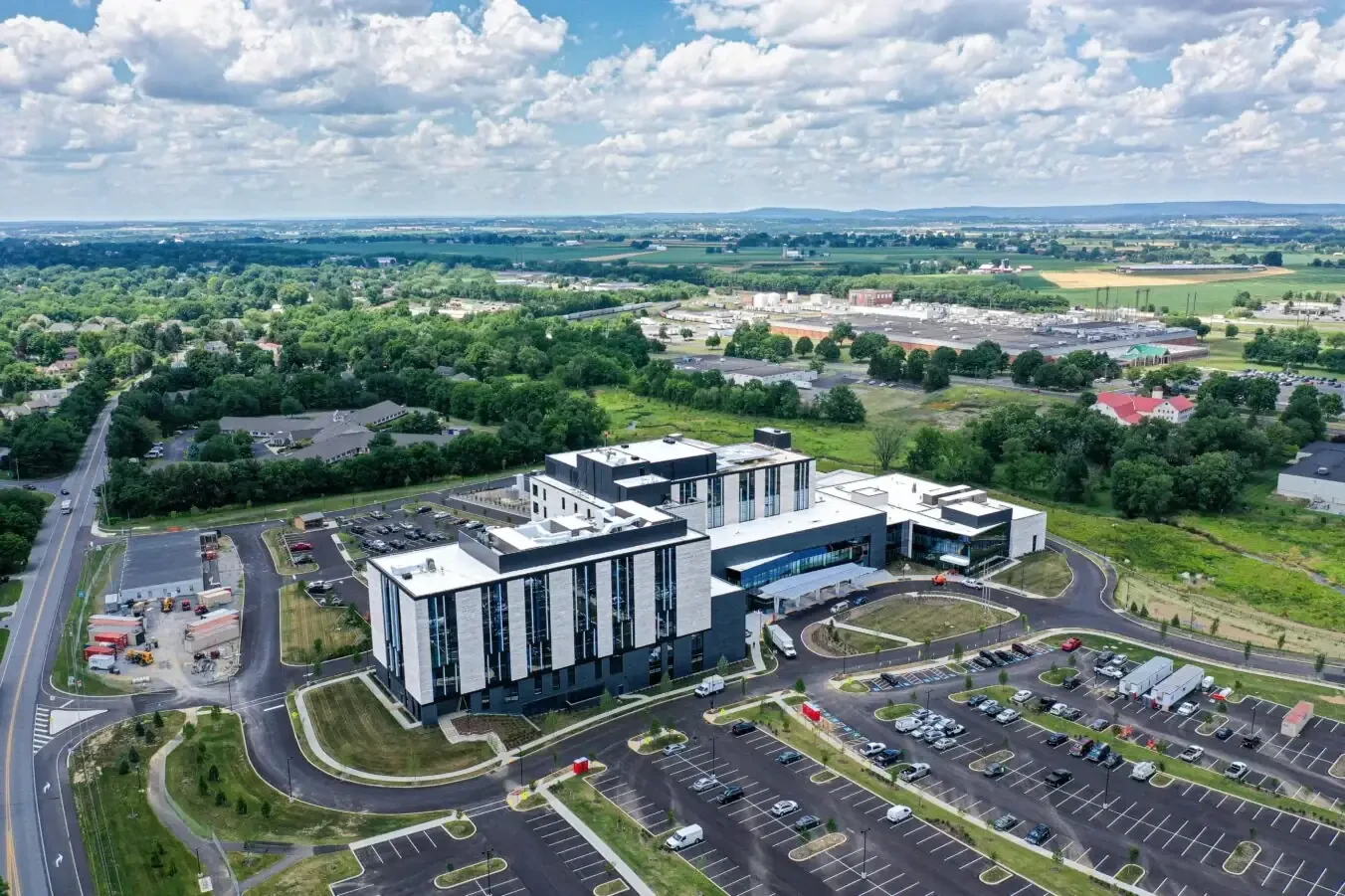
The megafab project in Clay has pulled a whole layer of supplier, logistics, and support construction up along Route 31 and the surrounding parcels. We don't work on the fab site itself, but we're seeing the ripple: new tilt-up and pre-engineered metal buildings going up fast, and older manufacturing stock nearby getting a second look from owners who want their roof squared away before the area gets busier.
Route 31 Is Filling In With Supplier and Support Space
A lot of the new construction along Route 31 and the parcels feeding into it is speculative or build-to-suit industrial space aimed at the supply chain that a project of that size pulls in. These are typically single-ply membrane over steel deck, built fast, and the roof is usually one of the last trades signed off before a tenant moves equipment in. We've been quoting both new-construction roof packages and pre-occupancy inspections on buildings that changed hands twice before anyone leased them.
Older manufacturing buildings scattered through Clay and the surrounding towns are a different animal. Some have been running the same built-up or modified bitumen roof since before anyone was talking about a fab in this county. Those owners are calling us now because they know the area is about to get more construction traffic, more truck congestion, and more scrutiny on anything that looks neglected from the road.
Deck Condition Sets the Whole Scope on a Working Plant
Manufacturing roofs almost never fail because of the membrane alone. They fail at the deck, usually where corrosion has been eating steel from underneath a leak nobody caught early. Before we quote anything, we're up there with a moisture meter and, on older buildings, a core cutter, checking whether the substrate under that membrane can even take a new system without reinforcement.
A plant that's been running three shifts doesn't get the luxury of a slow, exploratory roof survey. We move fast on the assessment and give straight numbers on what a repair buys you versus what a full tear-off buys you, because a manufacturing client needs to plan capital spending around production schedules, not around us taking our time getting to an answer.
Rooftop Process Equipment Changes the Flashing Plan
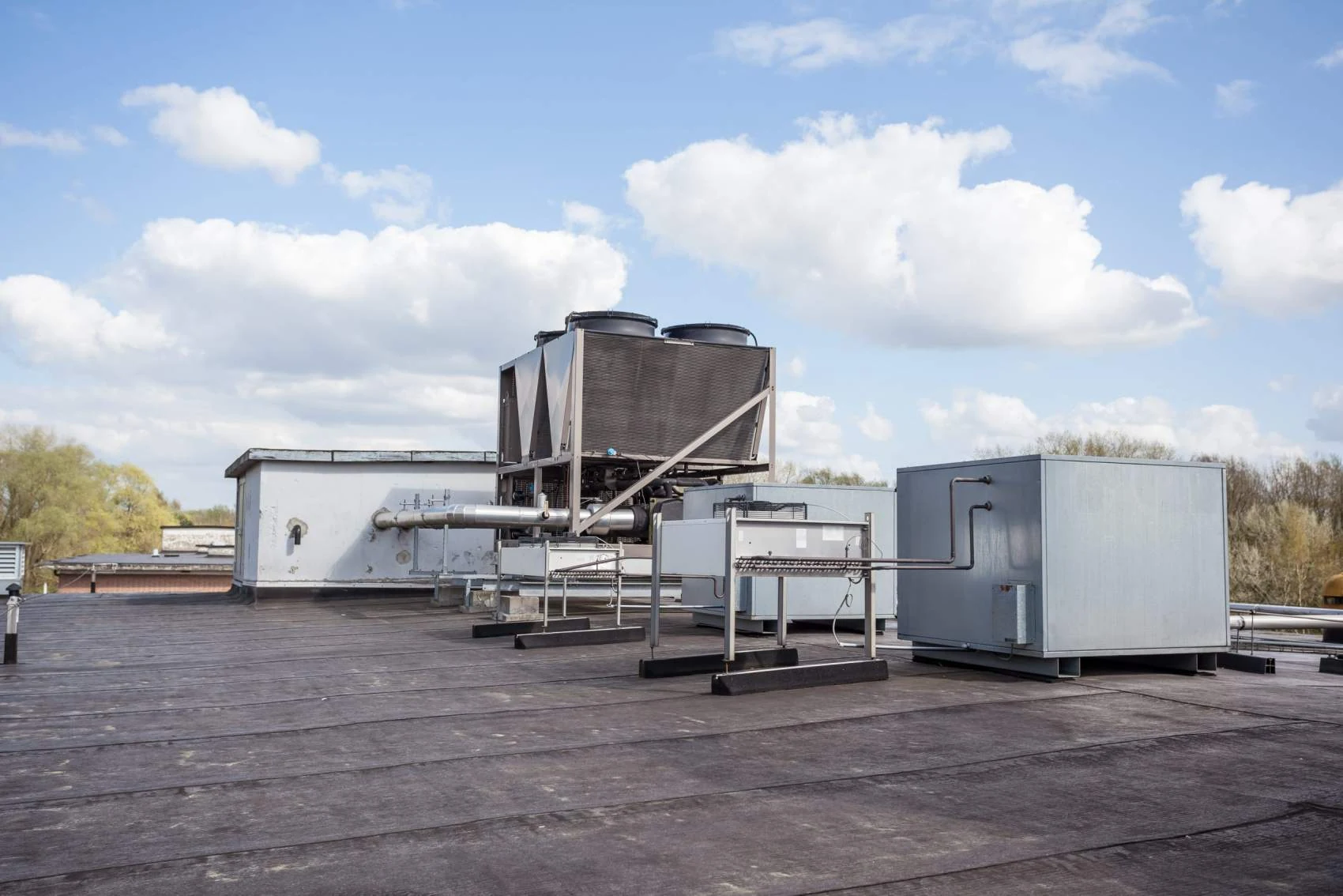
Manufacturing plants carry more rooftop penetrations than almost any other building type we work on: exhaust stacks, makeup-air units, dust collection, compressor pads, sometimes process piping that was added by a mechanical contractor years after the roof went in without much thought for how it would be flashed long-term. Every one of those is a spot where the membrane was cut into after the fact.
We catalog every penetration during inspection and flag anything that was flashed with field-mixed sealant instead of a proper curb detail. On a plant roof, that inventory usually runs longer than the drawings suggest, because equipment gets added over the years by whoever had the crane on site that week and nobody updates the roof plan.
What We Check Before We Quote a Manufacturing Roof
Every plant roof estimate starts with the same walk, whether the building is six months old or forty years old:
- Deck gauge and corrosion at drains, curbs, and equipment pads
- Every rooftop penetration and whether it was flashed to a real curb detail
- Existing insulation condition, wet or dry, by core sample
- Drainage capacity against the roof's actual footprint, not the original design
- Fire-rated assembly requirements tied to what's produced or stored below
- Access routes for material delivery that don't cross active production areas
- Snow load history and current code requirements for the roof's span
That list changes the price more than any membrane brand does. A clean deck with a handful of well-flashed penetrations is a straightforward recover. A deck with hidden corrosion under three old repairs is a different conversation entirely, and we'd rather have it before material shows up on a truck.
Lake-Effect Snow Load Isn't Optional Math on a Flat Plant Roof
Onondaga County sits in one of the heavier lake-effect snowbelts in the state, and a flat manufacturing roof carries that load differently than a pitched residential roof does. Drifting against parapet walls and rooftop equipment can stack snow two or three times deeper than what falls evenly across the field, and that's exactly where we see structural distress show up first.
We check drainage capacity against realistic snow-melt volume instead of rainfall tables alone, and we flag any roof where drift patterns have been loading the same corner for years without anyone measuring it. On a production building, a roof collapse or partial failure means far more than a repair bill; it's a shutdown, and that changes how seriously an owner takes a snow-load conversation.
Solvay and Fulton Carry the Region's Older Industrial Roof Stock
Solvay's Milton Avenue corridor and Fulton's plant district around the old Huhtamaki footprint are both still running a lot of legacy built-up and modified bitumen roofing from an era when manufacturing in this county looked different than it does now. Some of that stock has been recovered once or twice already, and each recover adds dead load and complicates the next decision.
We treat those buildings on their own terms rather than pushing a one-size answer. A plant that's downsized its operations doesn't need the same roof investment as one running full production, and we say so plainly when a lighter coating or targeted repair makes more sense than a full system replacement. See our industrial flex space roofing page for buildings that mix light manufacturing with office or warehouse use.
What Plant Managers Ask Before They Sign a Roof Scope
Can you work around an active production schedule?
Yes. We sequence material delivery, staging, and noisy work around shift changes and production windows the plant gives us. Most manufacturing reroofs happen in phases specifically so the building doesn't have to shut a line down for the work.
How do you handle a roof with equipment nobody has drawings for?
We document what's actually up there rather than trusting old roof plans. Field verification catches the compressor pad or exhaust stack that got added five years ago without an updated drawing, and we flash to what exists, not what's on paper.
Will new construction near the Micron site affect roofing costs out here?
Material and labor demand tend to tighten up wherever a project of that scale lands, so we'd rather get ahead of a plant's roof needs before the area gets more competitive for crews and material lead times.
What's the biggest risk on an older manufacturing roof in this area?
Hidden deck corrosion under a membrane that still looks fine from above. We won't quote a recover on a plant roof without checking the deck first, because a corroded deck under new membrane is a problem that gets more expensive the longer it's covered up.
Do you handle fire-rated roof assemblies for buildings with hazardous storage?
We work with the building's fire-rating requirements and coordinate with whoever's handling code compliance on the project. The roof assembly has to match what's stored or produced below, and we won't spec around that requirement.
Questions About Manufacturing Plant Roofing in Syracuse, NY
Ready to Review the Roof?
Service Area
Syracuse, NY
Roofing Category
Assessment Focus
Condition
Drainage
System options
Occupied operations
Next Step